Two questions decide almost every order: how many, and in what sizes. Both are guessed more often than they are worked out, and both have a real cost attached to guessing badly.
How the price per piece actually moves
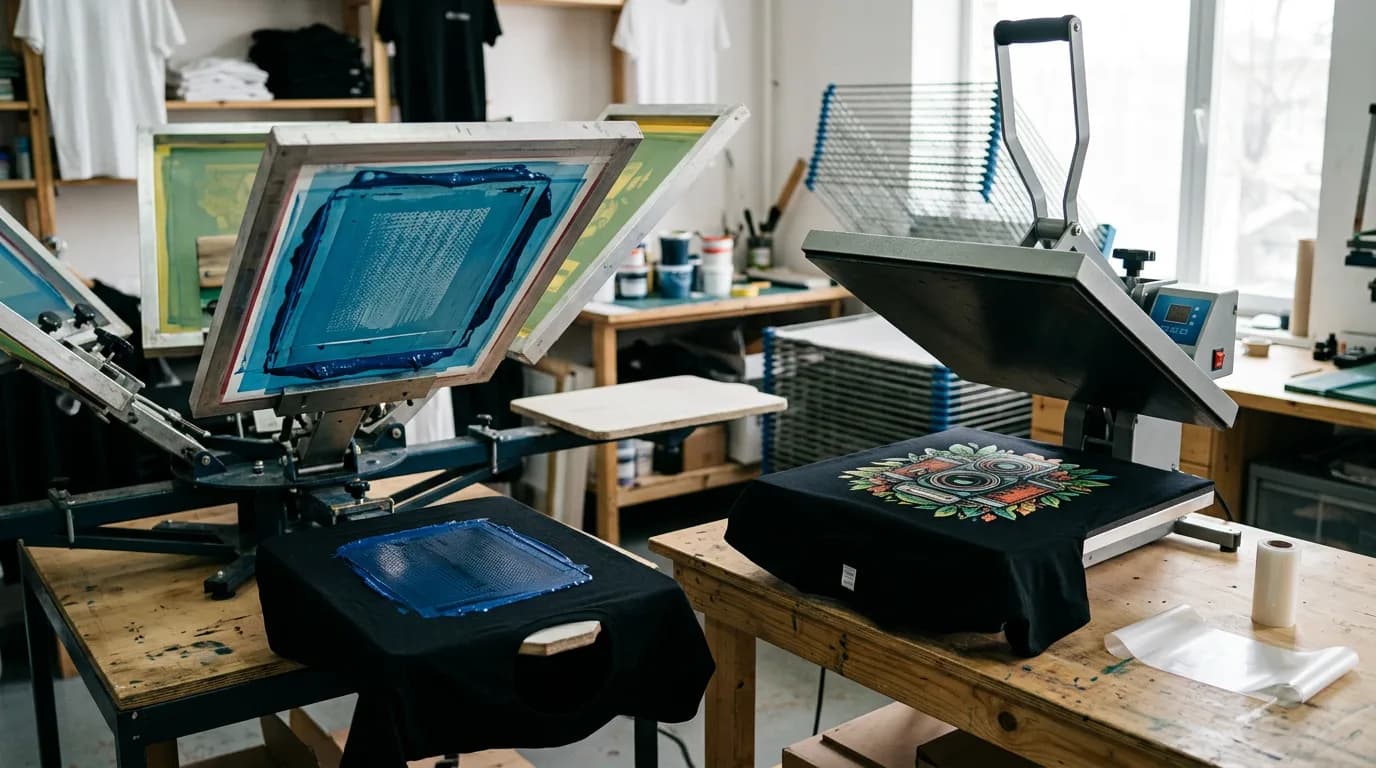
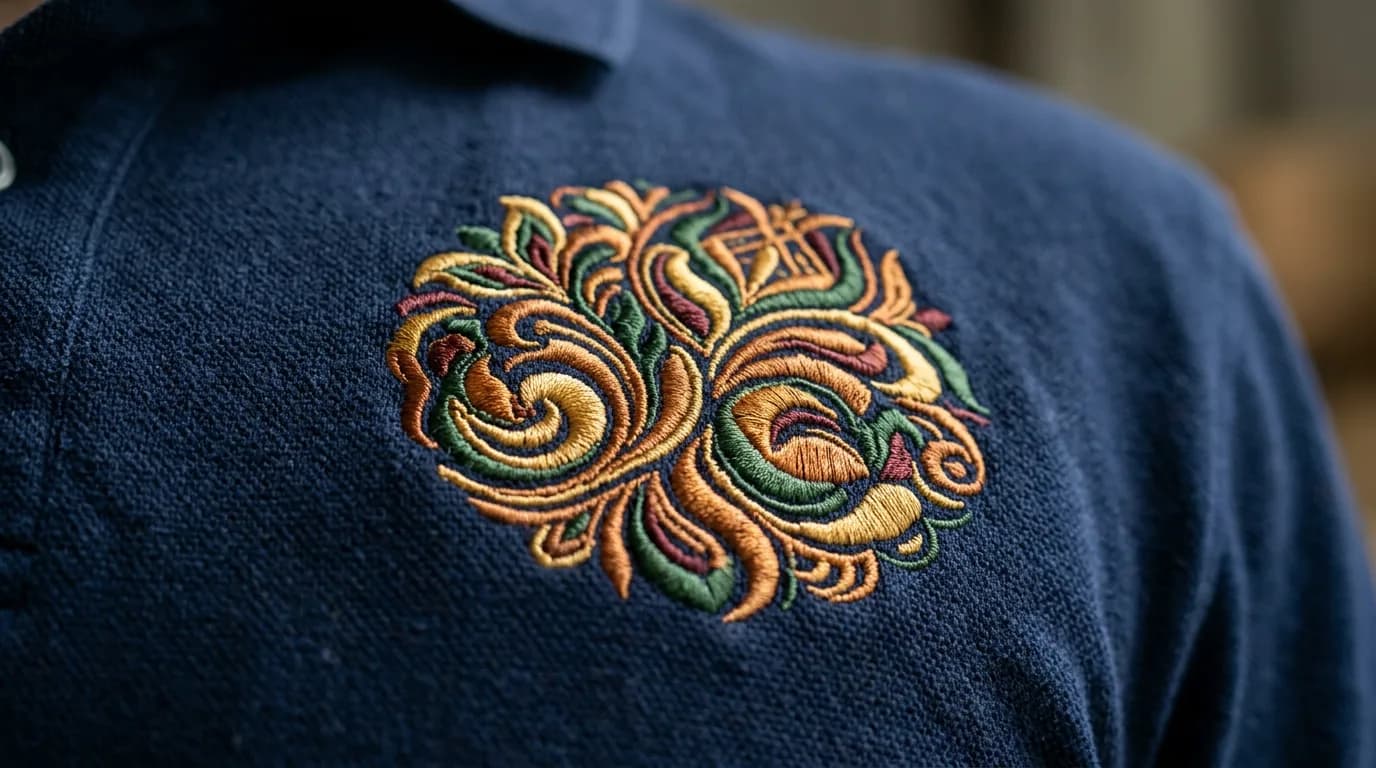
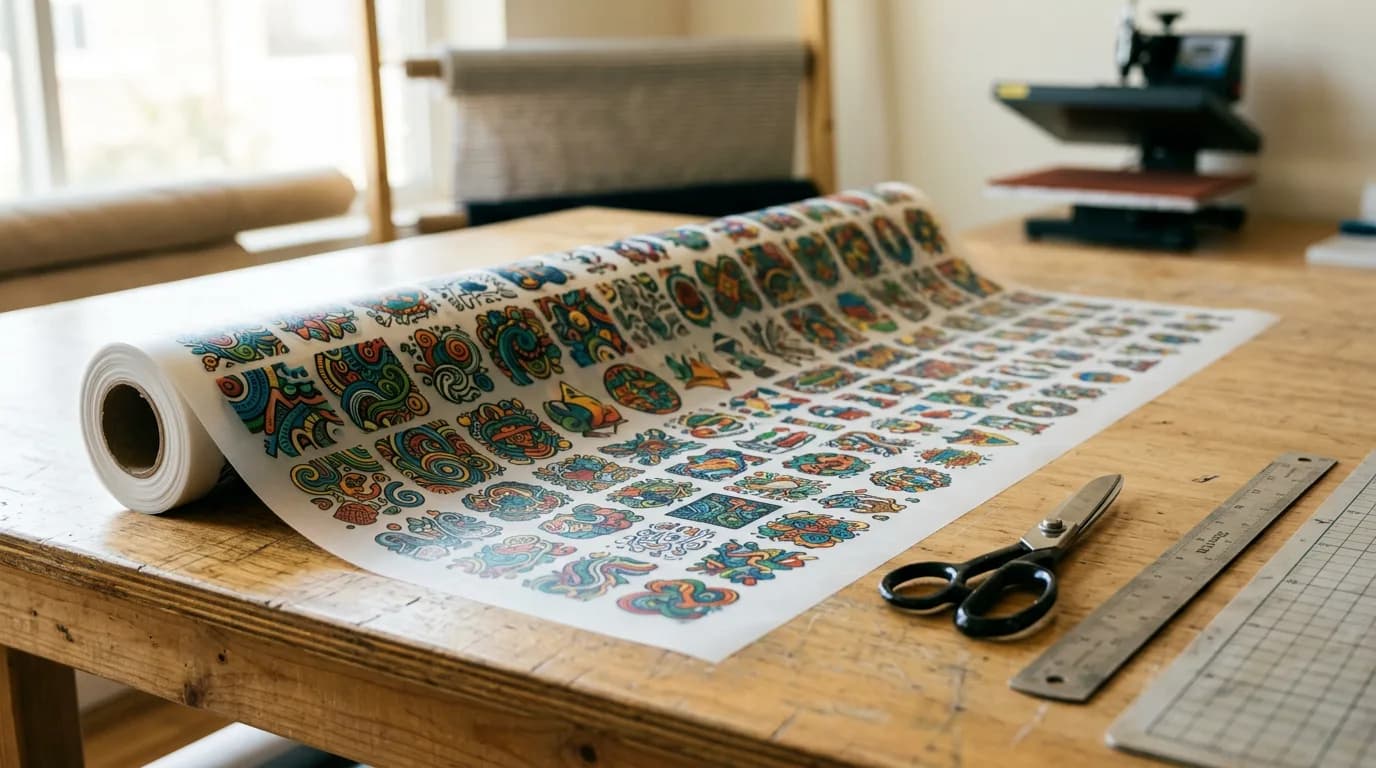
It does not fall smoothly. With DTF printing there is no setup, so twelve pieces cost close to twelve times one piece and the curve is nearly flat — ordering more saves you a little, not a lot. With embroidery the file has to be digitized once, and that cost spreads across however many pieces you run, so the first two dozen carry it and everything after is cheaper.
| Quantity | Best process | What is really happening |
|---|---|---|
| 1–11 | DTF | No setup to spread. Embroidery digitizing dominates the price. |
| 12–48 | Either | Embroidery digitizing is now a small share. Choose on look, not cost. |
| 49–150 | Either | Both are efficient. Garment cost is the biggest line. |
| 150+ | Ask about screen print | Simple designs get materially cheaper per piece. |
The size split nobody plans
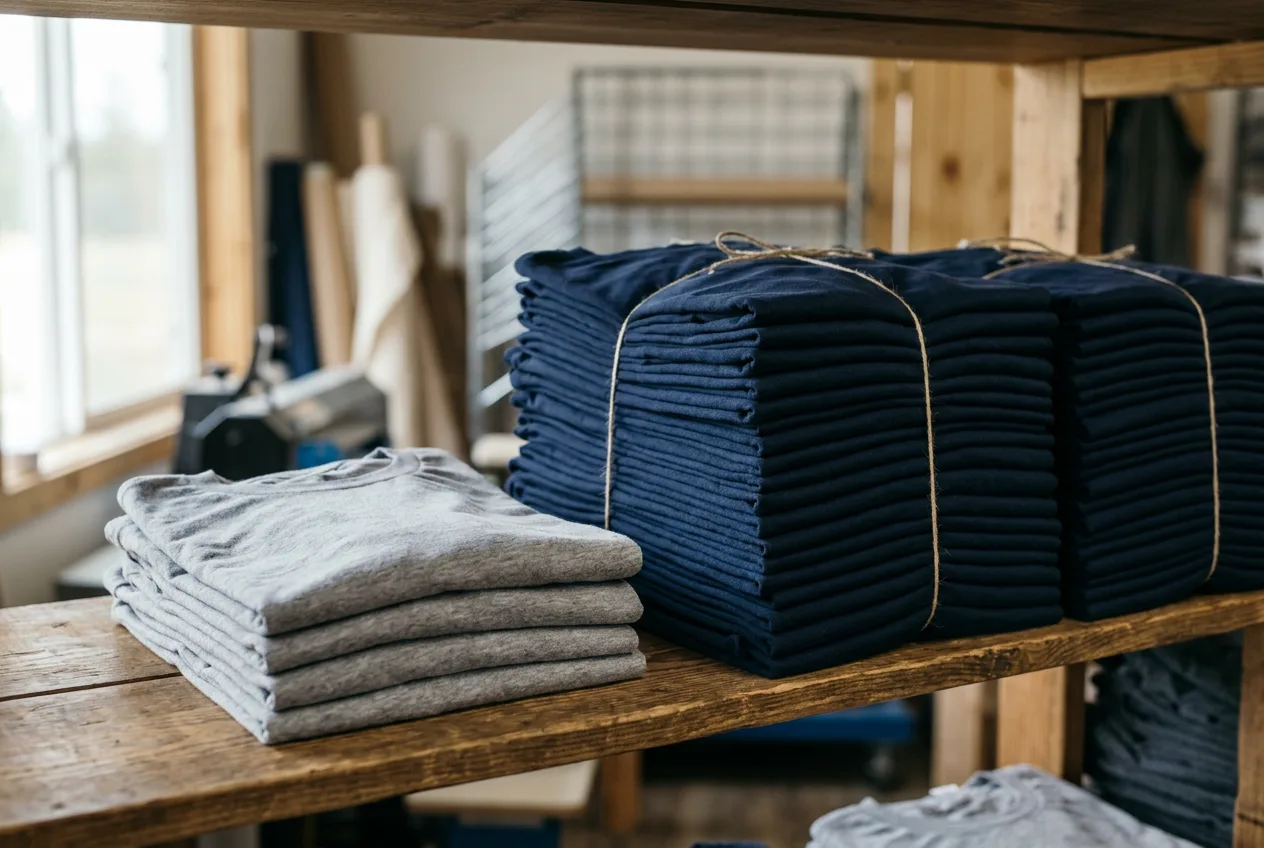
Ordering the same count in every size is the most common and most expensive mistake, because you finish with a box of XS and nothing in XL. For a general adult group, a split closer to this survives contact with reality:
- S — around 10 per cent
- M — around 25 per cent
- L — around 30 per cent
- XL — around 20 per cent
- 2XL and up — around 15 per cent
If you can collect actual sizes from the people who will wear them, do that instead and ignore the table. It takes one form and it is always more accurate than a rule of thumb.
Order about ten per cent over your headcount. Somebody always joins, and a reorder of six costs far more per piece than six extra in the first run.